
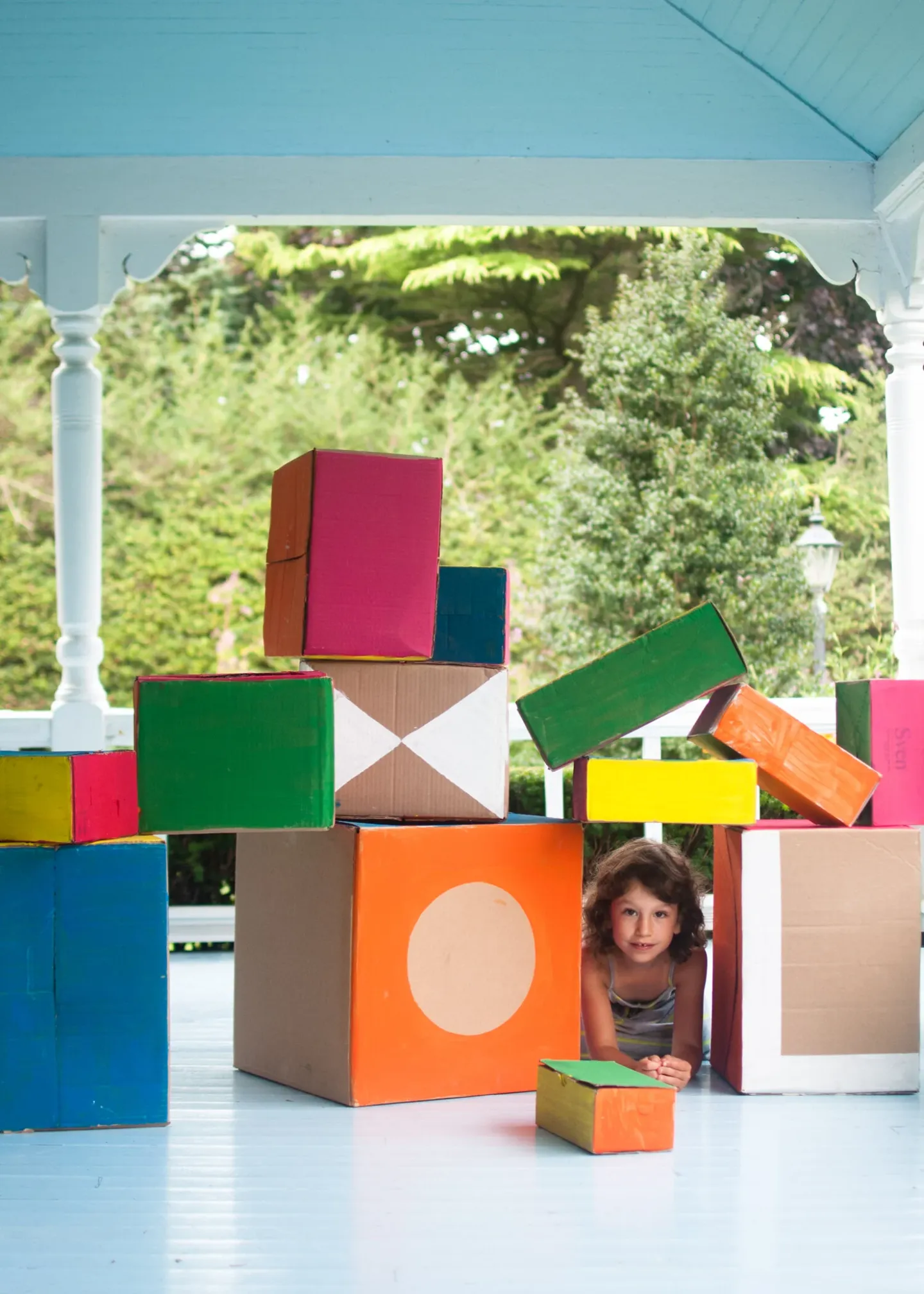
Giant Building Blocks can turn children's biggest building dreams into exciting hands-on adventures. Giant Building Blocks give young creators the freedom to design castles, towers, houses, bridges, cities, and imaginative worlds. With Giant Building Blocks, children can transform simple construction pieces into creations that reflect their ideas, stories, and personalities. Whether used at home, in a classroom, or in a childcare setting, Giant Building Blocks encourage creativity, active learning, problem-solving, and confidence through open-ended play.
Why Big Building Dreams Matter
Children naturally enjoy creating things. When they are given the freedom to build on a larger scale, their imagination can expand beyond small models and simple structures.
Large construction pieces allow children to create designs that feel more interactive. A tower can become a skyscraper, a few connected blocks can become a home, and an arrangement of pieces can turn into an entire imaginary community.
Encouraging Children to Think Creatively
Open-ended construction gives children control over the creative process. They can decide what they want to build, which pieces to use, and how they want their finished structure to look.
There is no need for every child to create the same design. One child may focus on height, while another may be more interested in creating detailed rooms or imaginative environments.
The Creative Potential of Giant Building Blocks
Giant Building Blocks provide a flexible foundation for creative construction. Because the pieces can be stacked, arranged, separated, and rebuilt, children can use them for countless projects.
A structure created today does not need to remain the same tomorrow. Children can dismantle an old design and use the pieces to create something completely new. For more information about large building blocks for kids, explore their features, benefits, age suitability, and role in encouraging imaginative and educational play.
Turning Ideas Into Reality
Building gives children a chance to see their ideas become physical objects. They can start with a simple concept and gradually add pieces until the structure takes shape.
This process can help children understand that large projects are often completed through smaller steps.
Learning From Construction Challenges
Not every structure will remain standing. Towers can lean, walls can collapse, and bridges may require additional support.
These challenges provide opportunities to think, adjust, and try again. Children learn that changing their approach can lead to better results.
Big Building Ideas for Kids
There are many projects that can inspire children to think creatively. Parents and educators can introduce an idea while allowing children to decide how they want to complete it.
Build a Giant Castle
Children can create a fantasy castle with walls, towers, gates, and rooms. Once constructed, the castle can become the setting for an imaginative adventure.
Toy figures, stuffed animals, or costumes can be incorporated into the story, creating opportunities for role-playing and storytelling.
Create an Imaginary City
Children can design an entire city with homes, shops, schools, garages, roads, and bridges.
Giant Building Blocks make it possible to construct large sections of a pretend community that children can walk around and interact with during play.
Design a Space Station
Children interested in science can create an imaginary space station. They might construct a control room, sleeping area, laboratory, launch platform, or spacecraft.
This activity can combine construction with conversations about planets, astronauts, exploration, and technology.
Developmental Benefits of Large Construction Play
Construction activities can support several areas of children's development while keeping them actively engaged.
Fine Motor and Coordination Skills
Picking up, carrying, positioning, and stacking pieces requires hand-eye coordination. Children practice controlled movements while working toward a specific construction goal.
Large pieces can be easier for young children to grasp while still providing valuable hands-on experiences.
Spatial Awareness
Children develop an understanding of height, width, distance, position, and balance as they construct different structures.
They can observe how changing the location of one piece affects the entire design.
Problem-Solving Skills
Giant Building Blocks encourage children to solve practical construction problems. If a tower falls, they can investigate what happened and experiment with a different foundation.
This process supports logical thinking and persistence.
Giant Building Blocks for Social Learning
Building can be an individual activity, but it can also become a collaborative project. When several children work together, they learn how to communicate and coordinate their ideas.
Teamwork and Cooperation
Children may divide responsibilities during a large project. One child can build the foundation, another can create walls, and another can design a tower.
Working together teaches sharing, turn-taking, listening, and cooperation.
Family Building Adventures
Parents can participate in construction activities without taking over the creative process. Allowing children to make decisions can help them feel that their ideas are valued.
A family might create a large village or fantasy kingdom together and then develop a story around the finished structure.
Learning Through Construction
Giant Building Blocks can be used to introduce educational concepts in an enjoyable way. Parents and educators can incorporate mathematics, science, language, and art into building activities.
Mathematics Through Building
Children can count pieces, compare structure heights, identify shapes, sort pieces, and create patterns.
They can also experiment with simple measurements by determining how tall or wide their structures are.
Exploring Engineering
Construction naturally introduces basic engineering ideas. Children can experiment with foundations, supports, balance, symmetry, and stability.
Adults can ask questions about why a particular design works and encourage children to test different solutions.
Creating a Dream-Building Environment
A suitable environment can help children focus on their projects. Choose a clear area with enough space for children to build and move safely around their structures.
Setting Up a Construction Zone
A carpet, suitable play mat, or stable floor can provide a comfortable building surface. Remove unnecessary obstacles and fragile objects from the area.
Keeping construction materials in one dedicated space can also make it easier for children to start and finish projects.
Organizing the Building Pieces
Giant Building Blocks should be stored in a way that makes them easy to access. Large bins, shelves, or containers can help keep pieces organized.
Children can participate in cleanup by returning pieces after each activity, encouraging responsibility and organization.
Choosing Giant Building Blocks
When selecting Giant Building Blocks, consider the children's age, physical abilities, available space, material, durability, and number of pieces.
Younger children may benefit from lightweight pieces that are easy to handle, while older children may enjoy larger sets that allow more complex designs.
Considering Safety
Choose age-appropriate construction products and follow the manufacturer's instructions. Inspect pieces regularly for cracks, damage, or sharp edges.
Children should not climb unstable structures unless the product is specifically designed for that purpose. Adult supervision can provide additional safety, particularly for younger children.
Keeping Big Building Dreams Fresh
One of the advantages of Giant Building Blocks is that the same pieces can support many different projects.
Parents can introduce weekly themes such as “build a castle,” “create a city,” “design a bridge,” or “construct an animal habitat.”
Encouraging Creative Challenges
Challenges can inspire children without restricting their imagination. Ask them to build the tallest stable tower, create a bridge between two areas, or design a house with several rooms.
Children can test their designs, make changes, and discover their own solutions.
Combining Construction With Storytelling
Construction and storytelling can work together to create richer play experiences. Once children finish a structure, encourage them to describe what it represents.
A house might belong to an imaginary family, while a tower could be a secret headquarters.
Expanding the Story
As the story develops, children can modify their structures. A new character may need a home, a city may require another bridge, or a rescue team may need a larger station.
This evolving activity encourages flexible thinking, creativity, and communication.
Frequently Asked Questions
1. What are Giant Building Blocks?
Giant Building Blocks are oversized construction pieces that children can stack, arrange, connect, and use to create large structures and imaginative environments.
2. What can children build with Giant Building Blocks?
Children can build castles, houses, towers, bridges, cities, forts, garages, animal habitats, space stations, and many other creative structures.
3. Do Giant Building Blocks help children learn?
Yes. Construction play can support coordination, spatial awareness, creativity, problem-solving, planning, early mathematics, engineering concepts, communication, and teamwork.
4. Can children build together?
Yes. Group construction encourages children to share materials, communicate ideas, divide responsibilities, and work toward a common project.
5. How can parents encourage big building dreams?
Parents can provide open space, introduce creative themes, ask questions, and allow children to make their own construction decisions. The goal should be exploration rather than perfection.
Conclusion
Giant Building Blocks give children the freedom to turn big dreams into hands-on creations. From castles and cities to bridges, houses, and imaginative space stations, these versatile construction pieces encourage children to think creatively and experiment with their ideas. Along the way, they can develop coordination, spatial awareness, problem-solving, teamwork, communication, and early STEM skills. Parents and educators can make construction even more meaningful by introducing creative challenges, storytelling themes, and educational activities. With a safe building environment and plenty of freedom to experiment, Giant Building Blocks can provide children with an exciting platform where imagination becomes something they can build, explore, change, and enjoy.